
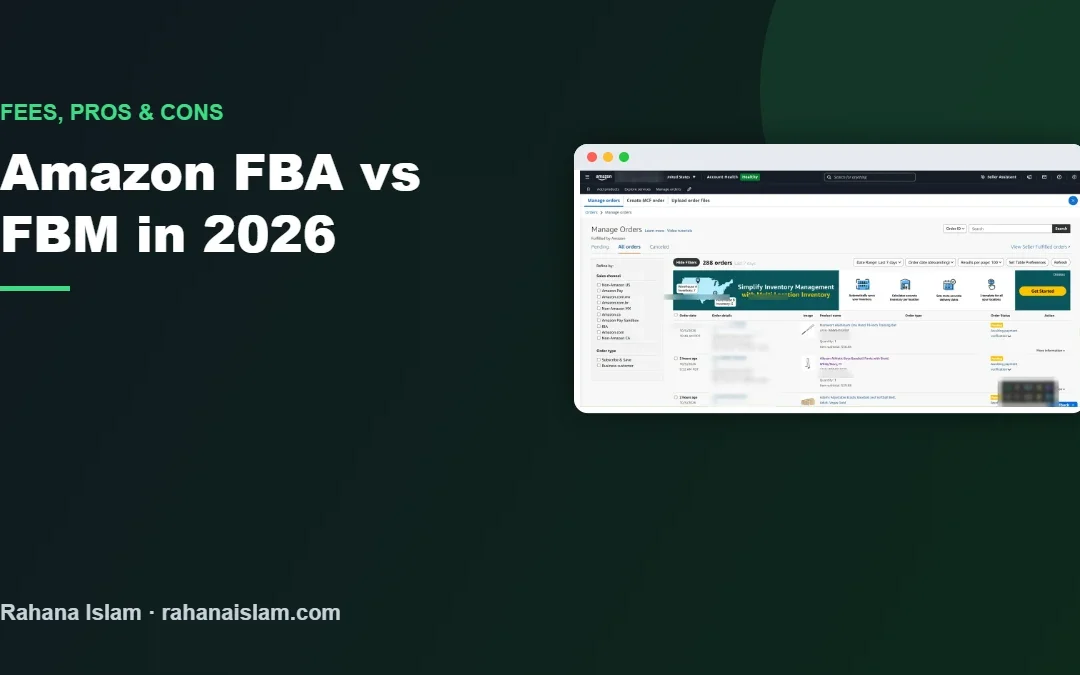
Amazon FBA vs FBM is one of the biggest decisions an Amazon seller makes. With Fulfillment by Amazon (FBA), Amazon stores and ships your products. With Fulfilled by Merchant (FBM), you or your warehouse do it. I manage both for a US sports retailer every day, so this guide compares the real costs, the effect on Prime and the Buy Box, and how to decide product by product.
Key Takeaways
- FBA gives you Prime, faster delivery and hands-off customer service, but adds fulfilment, storage and inventory fees.
- FBM avoids FBA fees and gives you full control, but you handle storage, shipping and returns yourself.
- Fast-moving, small and light products usually suit FBA; heavy, oversized, slow or fragile items often suit FBM.
- Many successful sellers use both and choose per product.
Table of Contents
Real example
See how I run FBA and FBM side by side for a store with 48,000+ orders a year
What Are FBA and FBM?
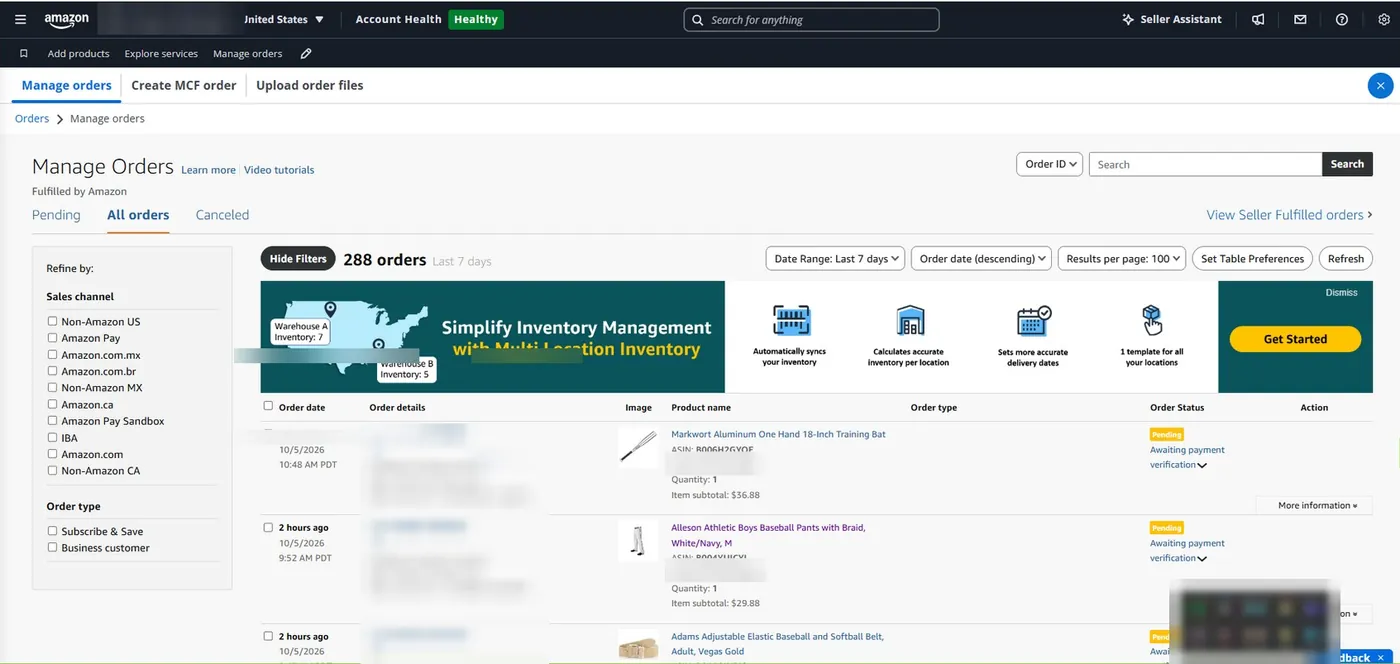
FBA (Fulfillment by Amazon): you send inventory to Amazon’s warehouses. Amazon stores it, picks, packs and ships each order, handles customer service and returns, and your listings get the Prime badge.
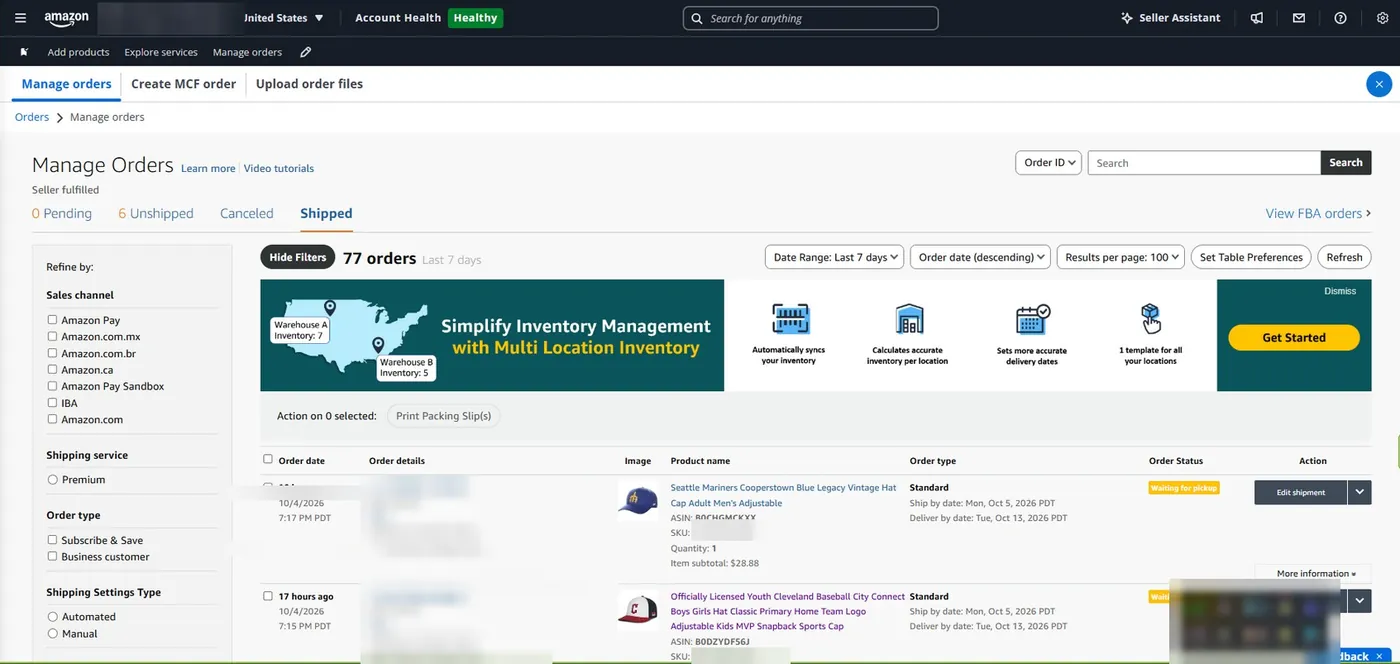
FBM (Fulfilled by Merchant): you keep inventory at home, in your warehouse or with a third-party logistics company (3PL). You ship each order yourself, upload tracking and handle returns.
FBA vs FBM: Side-by-Side Comparison
| FBA | FBM | |
|---|---|---|
| Who stores and ships | Amazon | You or your 3PL |
| Prime badge | Yes, automatically | Only with Seller Fulfilled Prime (strict requirements) |
| Buy Box | Usually stronger | Possible with fast shipping and good metrics |
| Main fees | Referral + fulfilment fee + storage + inbound/placement and low-inventory fees | Referral fee + your own shipping, packaging and storage |
| Customer service and returns | Handled by Amazon | Handled by you |
| Control over packaging and stock | Limited | Full |
| Best for | Small, light, fast-selling products | Heavy, oversized, slow-moving, fragile or custom products |
| Daily workload | Shipments to Amazon, stock planning, reimbursements | Daily order processing, labels, tracking, returns |
FBA vs FBM Fees in 2026
Both methods pay Amazon’s referral fee (a percentage of the sale price). The difference is everything after that:
- FBA adds a per-unit fulfilment fee based on size and weight, monthly storage fees (higher in Q4 and for aged stock), inbound placement fees depending on how your shipments are split, and a low-inventory fee if your stock runs too low for your sales speed.
- FBM has no fulfilment or storage fees from Amazon, but you pay for shipping labels, packaging, your own storage and your time (or a 3PL’s fees).
Fee rules change every year, so compare both options with the Revenue Calculator in Seller Central for each product before deciding.
Pros and Cons
FBA pros
- Prime badge and fast delivery, which usually lifts conversion.
- Stronger chance of winning the Buy Box.
- Amazon handles shipping, customer service and returns.
- Easy to scale without your own warehouse.
FBA cons
- Fees add up on heavy, oversized or slow-selling products.
- Storage and aged-inventory charges if stock sits too long.
- Lost or damaged units need reimbursement claims (see my FBA reimbursement guide).
FBM pros
- No FBA fulfilment or storage fees.
- Full control over packaging, inserts and inventory.
- Good for low-volume, bulky or custom products.
FBM cons
- No automatic Prime badge.
- Daily work: orders, labels, tracking and returns.
- Late shipments and slow replies hurt your account health.
How to Choose: A Simple Decision Guide
- Is the product small, light and selling fast? Start with FBA.
- Is it heavy, oversized or fragile? Compare FBA fees carefully; FBM often wins.
- Does it sell slowly (a few units a month)? FBM avoids storage and aged-inventory costs.
- Is the category very competitive? FBA’s Prime badge and Buy Box advantage often matter most.
- Do you have the time or team to ship every day? If not, FBA or a VA-run FBM routine.
Using FBA and FBM Together (Hybrid)
Many sellers, including the retailer I work with, use both: FBA for best sellers and FBM for bulky, slow or backup stock. FBM can also keep a listing live when FBA stock runs out, so you do not lose sales while a shipment is on its way.
The key is good routines: plan FBA restocks before you run low, and process FBM orders every day before the ship-by deadline. A simple ClickUp workflow helps keep both on track.
Related: Switching a product from FBA to FBM while units are still in Amazon’s warehouse can strand them. Here is how to fix Amazon stranded inventory.
Free template: log stranded, lost and damaged units in my free Amazon FBA Excel template.
Frequently Asked Questions
What is the difference between FBA and FBM?
With FBA, Amazon stores, ships and handles customer service for your products. With FBM, you store and ship orders yourself or through a 3PL.
Is FBA or FBM more profitable?
It depends on the product. FBA usually wins for small, light, fast-selling items because of Prime and the Buy Box. FBM often wins for heavy, oversized or slow-moving products where FBA fees are high.
Do FBM sellers get the Prime badge?
Not automatically. FBM sellers can only get Prime through Seller Fulfilled Prime, which has strict shipping and performance requirements.
Can I use FBA and FBM at the same time?
Yes. Many sellers use FBA for best sellers and FBM for bulky or slow items, or as backup when FBA stock runs out.
Can a virtual assistant manage FBA and FBM?
Yes. A VA can plan and create FBA shipments, process FBM orders, upload tracking, answer buyers and claim reimbursements. I do this for sellers at $5–7 per hour.
Conclusion
Amazon FBA vs FBM is not a one-time choice for your whole store. Compare the fees for each product, consider size, speed of sales and competition, and use both methods where they make sense. With good daily and weekly routines, you get the benefits of Prime without the storage headaches.
Amazon FBA Virtual Assistant
Need help running FBA shipments or daily FBM orders? See my Amazon virtual assistant service.
📌 Save this guide for later
Pin it to your Pinterest board so you can find it again when you need it.

About the Author
Rahana Islam
Virtual Assistant & E-commerce Specialist with 7+ years of remote experience supporting businesses in the United States, Denmark and worldwide with WordPress, Shopify, Amazon, Walmart and eBay operations. Level 2 Fiverr seller with a 5.0★ rating from 167 reviews, an NSDA-certified trainer & assessor and the #1 LEDP earner of Dhaka district.
Need Help With FBA or FBM?
I create FBA shipments, process FBM orders and keep your account healthy at $5–7/hour.